


A mini split air conditioner is a heating and cooling system that provides targeted comfort without requiring traditional ductwork. Unlike central air conditioning systems that rely on a network of ducts to distribute conditioned air throughout a home, mini splits use individual indoor units connected to an outdoor compressor.
These systems are becoming a popular choice for homeowners who want better temperature control, improved energy efficiency, and flexible installation options. They are especially useful for homes without existing ductwork, room additions, garages, bedrooms, and areas where extending a central HVAC system may not be practical.
Understanding how mini split systems work can help you determine whether this type of air conditioner is the right option for your home.
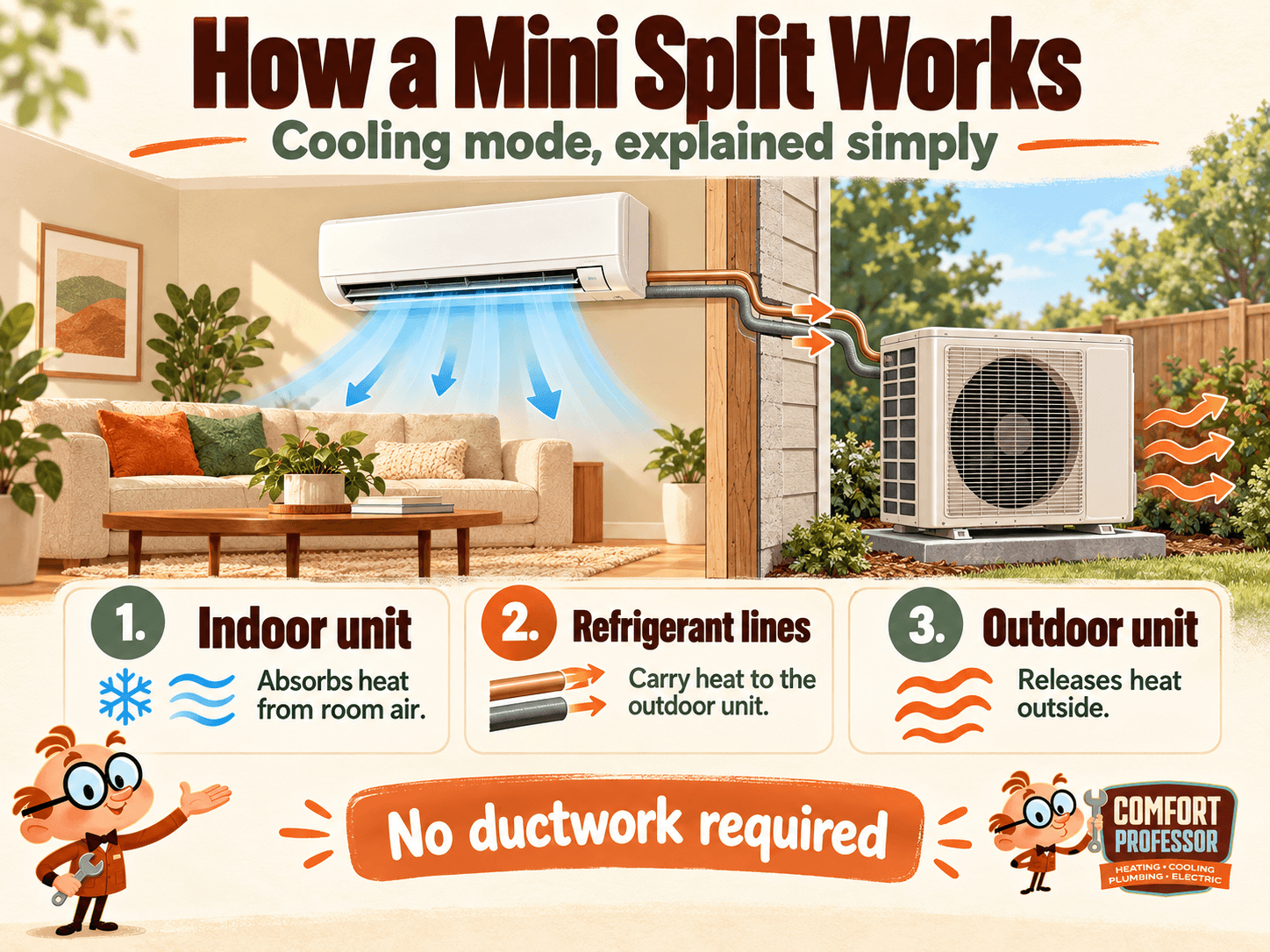
A mini split air conditioner works by transferring heat between indoor and outdoor spaces using refrigerant. The system has two main components:
The indoor unit is installed inside the room that needs heating or cooling. It contains an evaporator coil and fan that distribute conditioned air directly into the space.
Many homes use multiple indoor units connected to one outdoor unit, allowing homeowners to control temperatures in different areas independently.
The outdoor unit contains the compressor and condenser coil. It removes heat from inside the home during cooling operation and releases it outdoors.
The indoor and outdoor units are connected through refrigerant lines, electrical wiring, and a condensate drain line.
The biggest difference between a mini split and a traditional central air system is the way air is distributed.
A central air conditioner uses ductwork to move cooled air throughout the home. While effective, ducts can lose energy through leaks and poor insulation.
A mini split system delivers conditioned air directly into individual rooms. This allows homeowners to create separate temperature zones instead of cooling the entire house at the same temperature.
Some key differences include:
Mini Split System | Central Air Conditioning |
Does not require ductwork | Requires duct installation |
Provides room-by-room temperature control | Controls the entire home together |
Easier installation in homes without ducts | More complex installation |
Reduces energy loss from duct leaks | May experience duct-related energy loss |
Mini split systems offer several advantages for homeowners looking for flexible heating and cooling options.
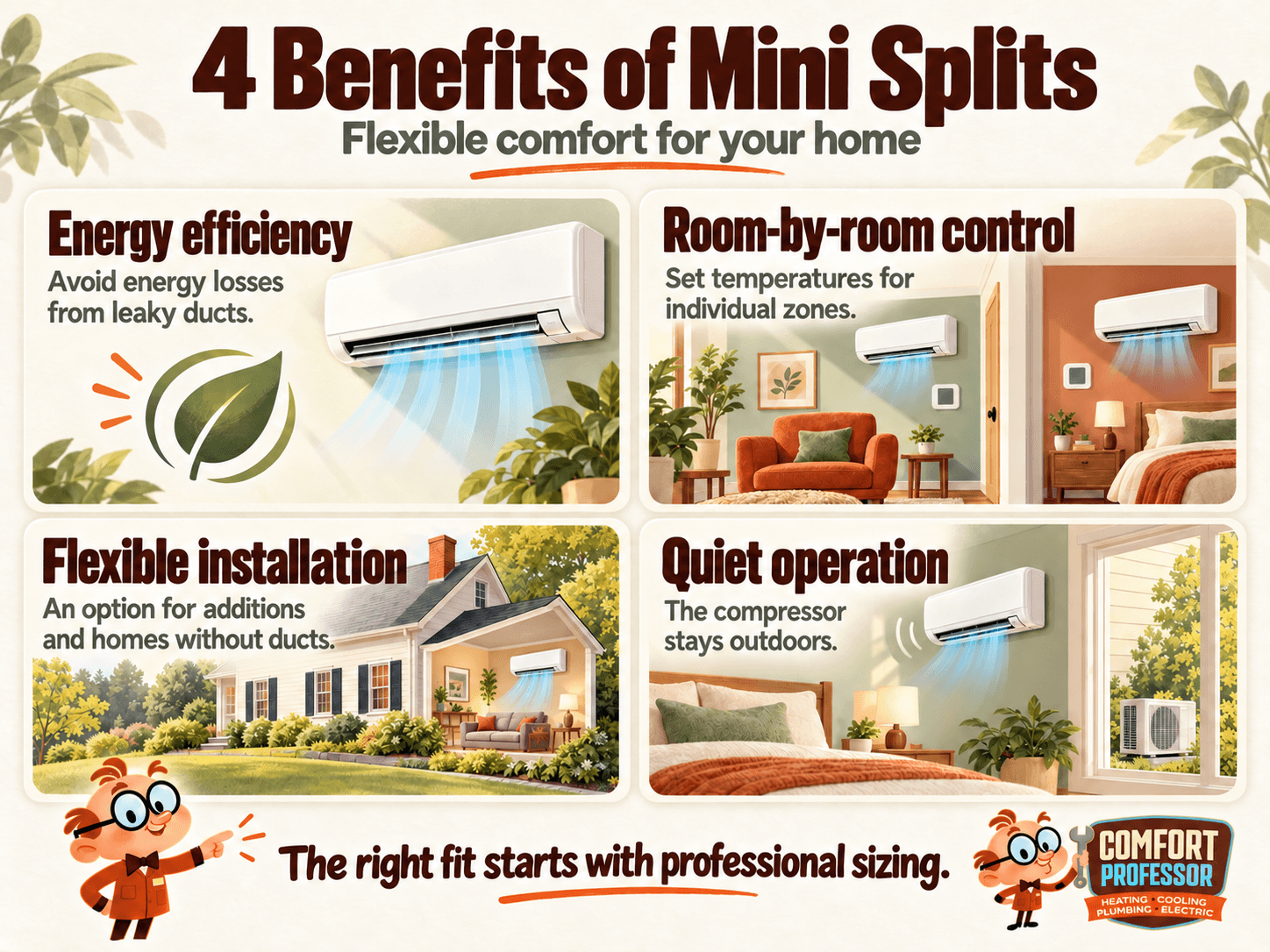
Because mini splits deliver air directly into specific rooms, they can reduce wasted energy. Homeowners can cool occupied areas without running the system throughout the entire house.
Many modern mini split systems also use inverter technology, which allows the compressor to adjust its speed based on cooling demand.
One of the biggest advantages of a mini split AC system is zoning.
Each indoor unit can often be controlled separately, allowing different rooms to have different temperature settings. This can be useful for households where family members prefer different comfort levels.
Mini splits do not require extensive ductwork, making them easier to install in certain homes.
They are commonly used for:
Mini split systems are designed to operate quietly compared with some traditional HVAC systems. Since the compressor is located outdoors, indoor noise levels are typically reduced.
No. Many mini split systems are heat pumps that provide both heating and cooling.
During warmer months, the system removes heat from inside the home and transfers it outdoors. During colder months, the process reverses, allowing the system to pull heat from outdoor air and bring it inside.
This makes mini splits a year-round comfort solution for many homeowners.
There are several types of mini split systems depending on the home’s needs.
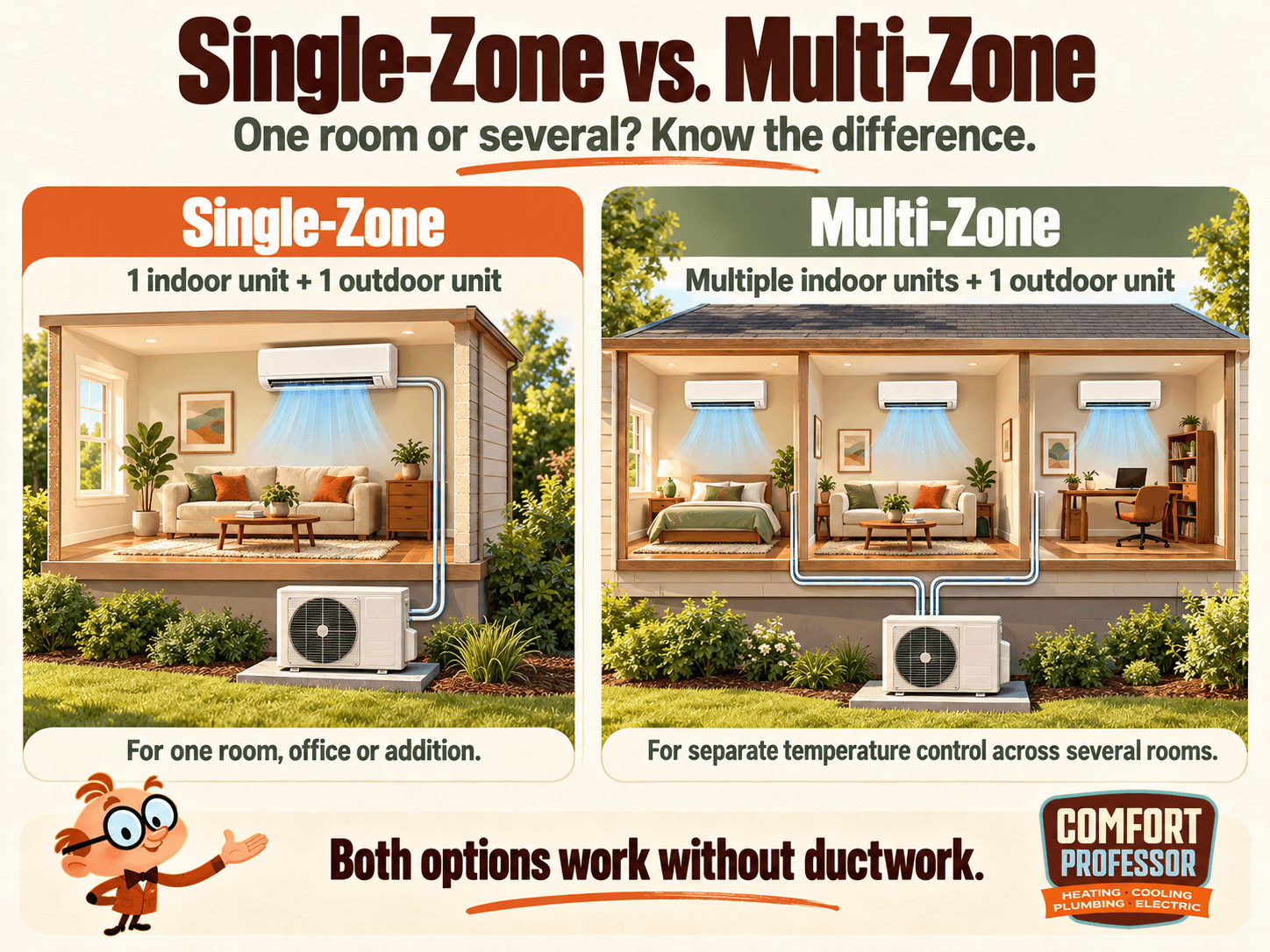
A single-zone system connects one indoor unit to one outdoor unit. It is often used for:
A multi-zone system allows multiple indoor units to connect to one outdoor unit.
This option can provide customized temperature control across several rooms while avoiding the need for duct installation.
A mini split system may be a good choice for homeowners who want:
However, the right HVAC system depends on factors such as your home’s layout, insulation, comfort needs, and budget.
A professional HVAC technician can evaluate your home and recommend the best option.
A mini split air conditioner may be worth considering if:
Proper installation plays an important role in the performance and efficiency of a mini split system. Incorrect sizing, poor placement, or improper refrigerant handling can reduce system performance and increase operating costs.
Comfort Professor provides professional ductless mini split services to help homeowners choose, install, and maintain systems designed for their home’s needs.
Contact Comfort Professor today to learn more about installing a ductless mini split system in your home.
Backed by our No-Breakdown Maintenance Guarantee. If we should have caught it and didn't, your maintenance is on us.
Free Second Opinions. Already got a quote from another company? We'll come out and take a look for free.
Considering a replacement instead? Ask about $1,000 in heat pump savings + up to $8,500 in rebates.
Call for details. Restrictions apply. Offer tier applied is based on the date you schedule service.