


tagline-stacked-dark-bg-1

Call 617.807.7333 Today!

How Much Does a Mini Split Cost? Pricing Factors Explained

How much does a minisplit cost

A mini split system can be an efficient way to heat and cool your home, especially if you want room-by-room temperature control without installing ductwork. However, one of the first questions homeowners ask is, “How much does a mini split cost?”

The total cost of a mini split depends on several factors, including the size of the system, the number of indoor units, installation requirements, and the complexity of the project.

Understanding these factors can help you estimate your investment and determine whether a ductless mini split system is the right choice for your home.

How Much Does a Mini Split Cost?

The cost of a mini split system varies depending on your home’s needs and the type of installation required.

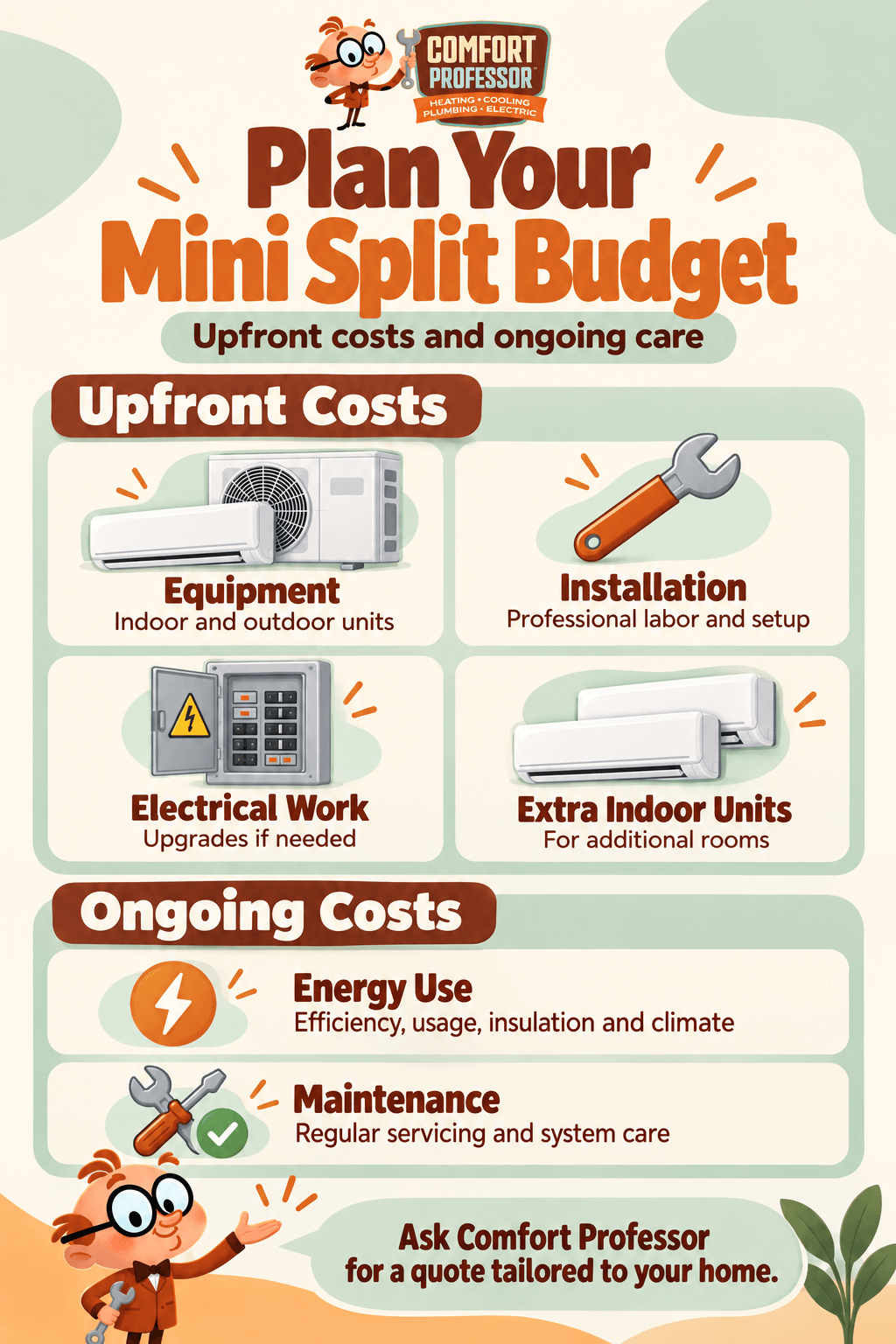
On average, homeowners can expect mini split costs to include:

  • Equipment purchase
  • Professional installation
  • Electrical work, if needed
  • Additional indoor units for multi-zone systems
  • Maintenance and long-term operating expenses

A smaller single-zone system designed for one room will typically cost less than a multi-zone system designed to cool or heat several areas of a home.

Because every home is different, a professional HVAC evaluation is the best way to determine the exact cost for your project.

What Factors Affect Mini Split Cost?

What affects mini split cost

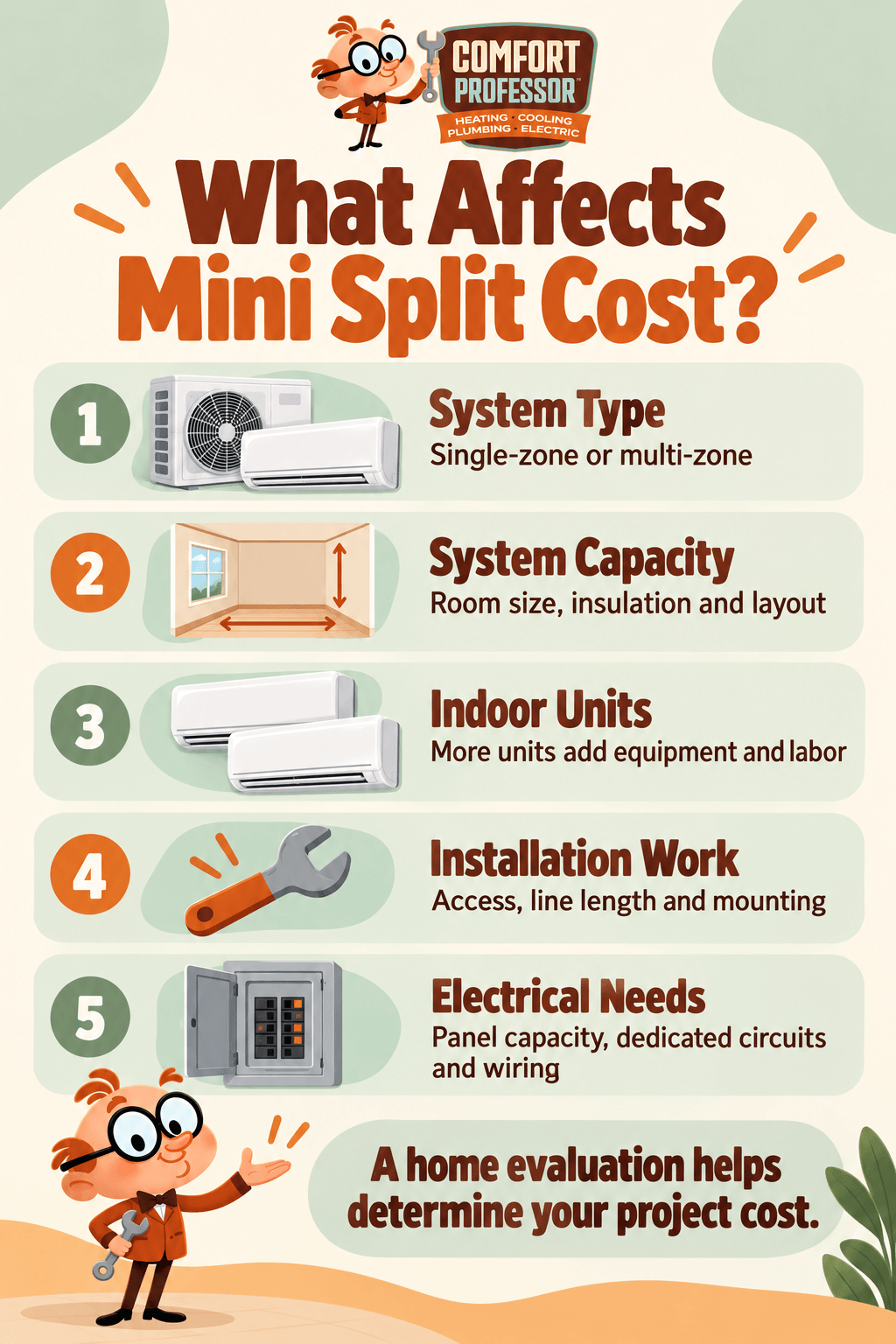
Several factors influence the overall price of installing a mini split air conditioner.
1. Type of Mini Split System

Single zone or multi zone

The type of system you choose plays a major role in cost.

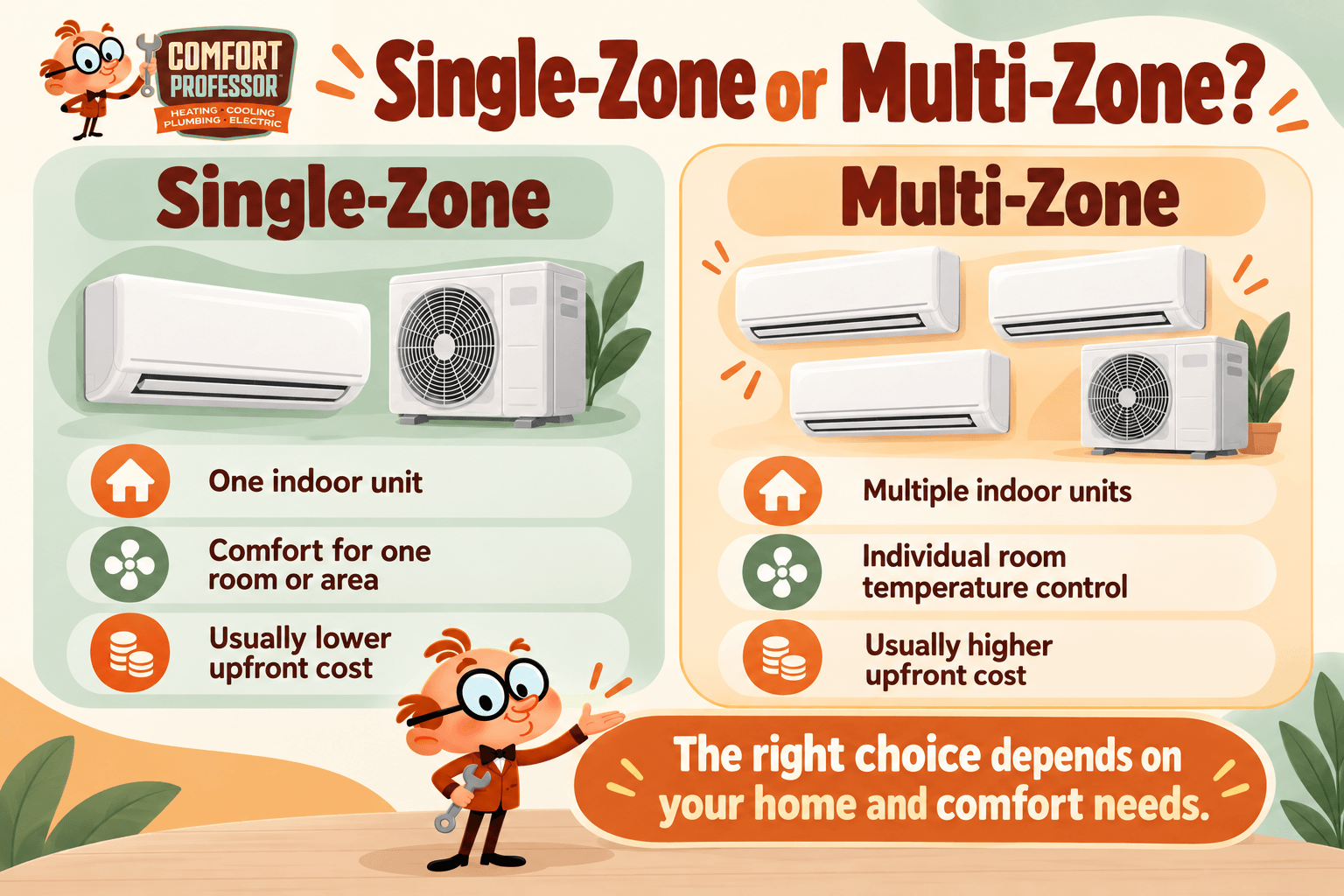
Single-Zone Mini Split

A single-zone system includes one indoor unit connected to one outdoor compressor.

It is commonly installed in:

  • Bedrooms
  • Home offices
  • Garages
  • Room additions

Since it only serves one area, it is generally a more affordable option.

Multi-Zone Mini Split

A multi-zone system allows multiple indoor units to connect to one outdoor unit.

This setup is useful for homeowners who want independent temperature control throughout several rooms.

Because it requires additional equipment and more complex installation, multi-zone systems usually have higher upfront costs.

2. System Size and Cooling Capacity

Mini split systems are available in different sizes based on their cooling and heating capacity.

The correct size depends on factors such as:

  • Room square footage
  • Ceiling height
  • Insulation quality
  • Number of windows
  • Sun exposure
  • Home layout

A system that is too small may struggle to maintain comfortable temperatures, while an oversized system may cycle on and off too frequently.

A professional HVAC technician can calculate the correct capacity needed for your home.

3. Number of Indoor Units

The number of indoor units affects the total mini split cost.

For example:

  • One indoor unit for a single room requires less equipment
  • Multiple indoor units require additional materials and installation time

Multi-zone systems provide more customized comfort but involve a larger installation project.

4. Installation Complexity

Installation requirements can affect the final price of a mini split system.

Factors that may increase installation complexity include:

  • Difficult access areas
  • Long refrigerant line runs
  • Multiple indoor units
  • Electrical upgrades
  • Special mounting requirements

Homes with simple layouts may require less installation work compared with larger or more complex properties.

5. Electrical Requirements

Some homes may need electrical improvements before installing a mini split system.

A technician may need to evaluate:

  • Electrical panel capacity
  • Dedicated circuits
  • Wiring requirements
  • Safety considerations

If electrical upgrades are required, they may add to the overall project cost.
Are Mini Splits Expensive to Run?

plan your mini split budget

While the upfront cost of a mini split system can vary, many homeowners choose them because of their potential energy savings.

Mini splits can help reduce energy use by allowing homeowners to cool or heat specific rooms instead of the entire home.

For example, you may not need to cool unused bedrooms during the day. A zoned mini split system allows you to adjust temperatures based on how each area is being used.

Factors that affect operating costs include:

  • System efficiency rating
  • Usage habits
  • Home insulation
  • Local climate
  • Maintenance schedule

Is a Mini Split Cheaper Than Central Air?

The answer depends on the home and installation requirements.

A mini split system may be more affordable when:

  • A home does not have existing ductwork
  • Only certain rooms need heating and cooling
  • A homeowner wants to avoid major renovations

Central air may be a better fit for homes that already have ductwork and require whole-home temperature control.

Comparing installation requirements, energy use, and comfort needs can help homeowners choose the best HVAC option.

Can You Install a Mini Split Yourself to Save Money?

Some homeowners consider DIY mini split installation to reduce costs. However, installing a mini split involves technical requirements, including:

  • Refrigerant handling
  • Electrical connections
  • Proper sizing
  • Indoor and outdoor unit placement
  • System testing

Incorrect installation can lead to reduced efficiency, poor performance, or equipment problems.

Professional installation helps ensure the system operates safely and efficiently.

How Can You Reduce Mini Split Installation Costs?

Homeowners can manage mini split expenses by:

Choosing the Right System Size

Installing a properly sized system prevents paying for unnecessary capacity while ensuring reliable comfort.

Installing During Home Improvements

If you are already remodeling a room or adding space, it may be easier to include mini split installation during the project.

Maintaining Your System

Regular maintenance can help extend equipment life and prevent expensive repairs.

Working With an Experienced HVAC Professional

Proper installation helps maximize efficiency and prevents issues caused by incorrect setup.

Is a Mini Split Worth the Investment?

A mini split system can be a valuable option for homeowners who want:

  • Flexible temperature control
  • Energy-efficient heating and cooling
  • Installation without ductwork
  • Better comfort in specific rooms
  • A solution for home additions or renovations

The best choice depends on your home’s design, comfort needs, and budget.

Professional Mini Split Installation Services

Understanding mini split costs is an important first step, but choosing the right system and ensuring proper installation are equally important.

Comfort Professor provides professional ductless mini split services to help homeowners select, install, and maintain efficient HVAC solutions.

Whether you need cooling for one room or a complete multi-zone system, our team can help you find the right option for your home.

Contact Comfort Professor today to learn more about mini split installation and pricing options.

SCHEDULE YOUR SERVICE
Contact Us Today
*All fields required