


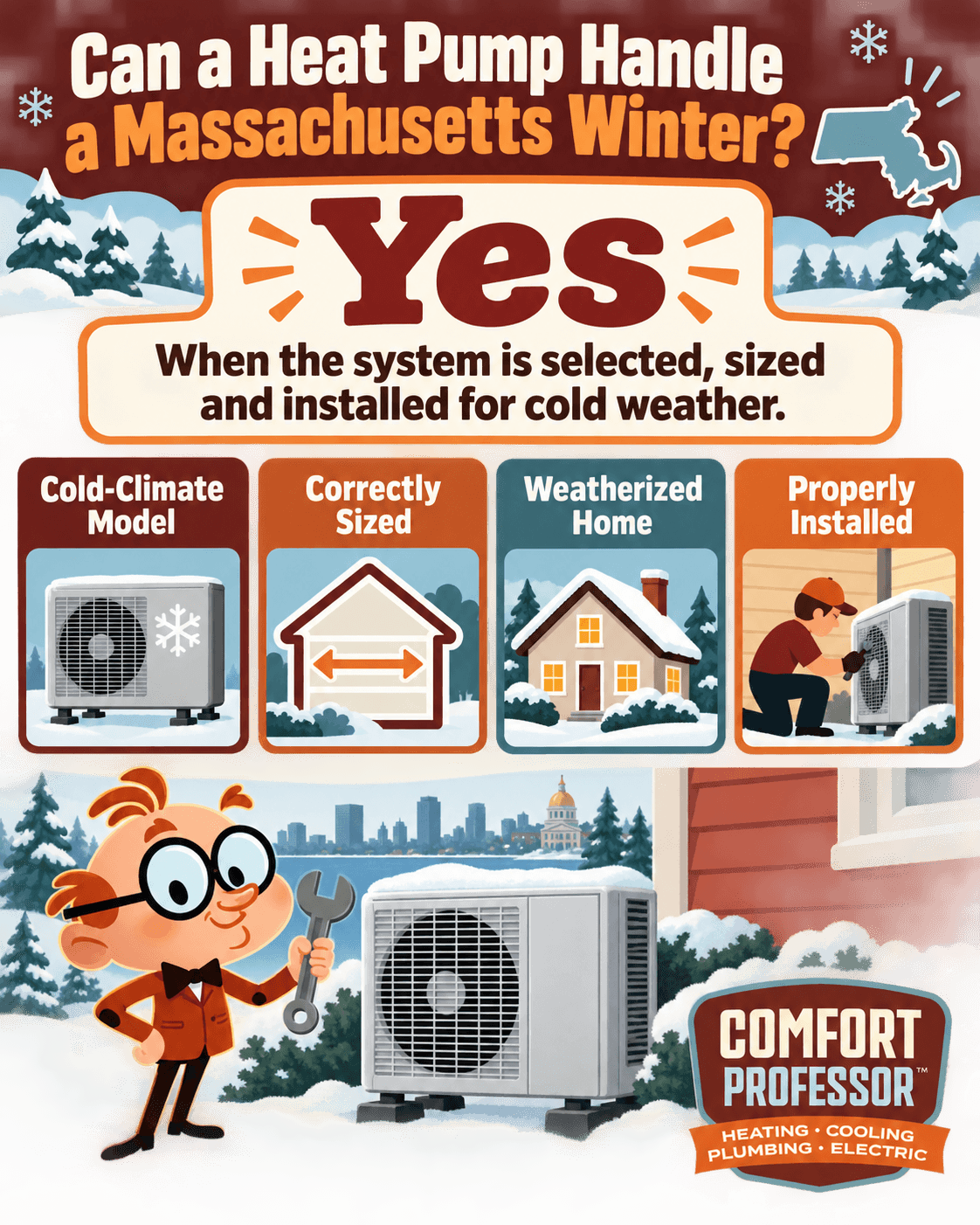
Yes. A cold-climate heat pump can heat a Massachusetts home through winter when the equipment is selected for low-temperature performance, sized from a heating-load calculation, and installed in a sufficiently weatherized home. Some homes can use a heat pump as the sole heat source. Others are better served by a hybrid setup that keeps a boiler or furnace for the coldest conditions.
The word cold-climate is important. Standard models, poor sizing, air leakage, and weak system design can leave a home uncomfortable even when the equipment itself is working.
A heat pump does not create heat by burning fuel. It transfers heat from the outdoor air into the home. Even cold air contains usable heat.
Modern variable-speed systems can continue operating below freezing. To earn the ENERGY STAR cold-climate designation, a heat pump must meet low-temperature performance requirements at 5°F. This includes maintaining at least 70% of its 47°F heating capacity and achieving a coefficient of performance of at least 1.75 at 5°F.
The system’s exact output still depends on the model and outdoor temperature. Homeowners should compare the equipment’s low-temperature capacity, not rely only on its general heating size or marketing description.
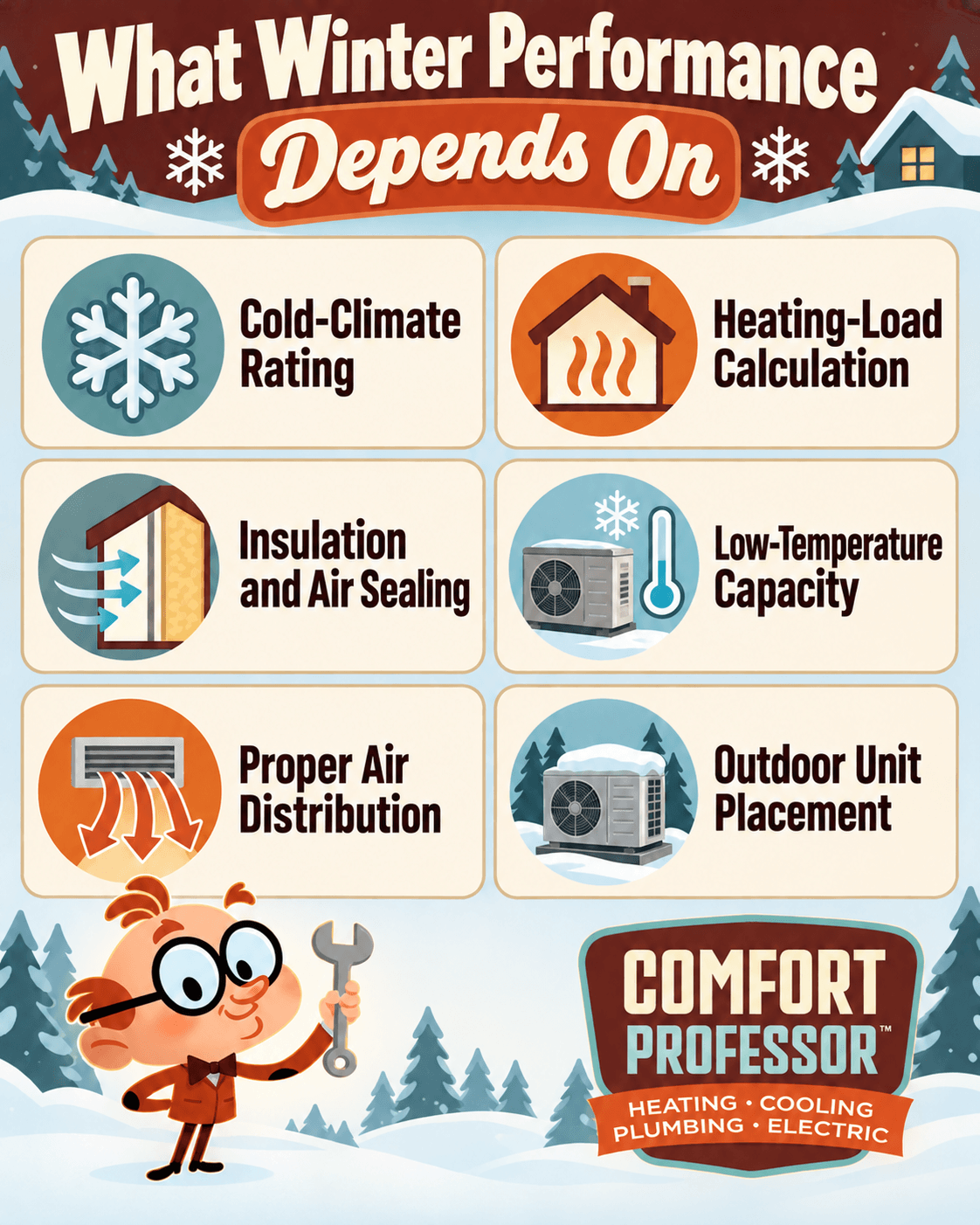
A good heat pump can underperform when the system is not designed around the house. Before installation, the contractor should assess:
Ask for a room-by-room or whole-home load calculation, often called a Manual J calculation. Replacing a boiler by simply matching its nameplate BTU rating can lead to oversizing because older heating equipment is often larger than the home’s actual load.

It can, but the answer depends on the home.
A whole-home heat-pump design is more likely to work well when:
A hybrid or partial-home system may make more sense when the home has difficult rooms, limited electrical capacity, significant air leakage, or an existing boiler or furnace the homeowner wants to keep. An integrated control can switch between the heat pump and backup system based on temperature or operating cost.
Boilers and furnaces often deliver short bursts of very hot heat. Heat pumps usually run longer and supply gentler, steadier warmth. The air may not feel as hot at the register, even while the room temperature remains comfortable.
Large thermostat setbacks can make recovery slower and may trigger backup heat in some systems. A steady setting is often more effective, but the right control strategy depends on the equipment and whether another heating system is connected.
Operating cost depends on the home’s heat loss, the heat pump’s efficiency at low temperatures, electricity rates, thermostat habits, and the fuel being replaced. A heat pump may reduce total heating cost in one home and increase it in another. Comparing only one utility bill can also be misleading if the heat pump provides air conditioning or replaces part of another fuel bill.
Massachusetts now has seasonal residential heat-pump rates through participating electric utilities. These rates reduce certain winter delivery charges from November through April. For example, National Grid’s heat-pump rate information says eligible R-1 customers may save an estimated $70 to $141 per month during that period, depending on usage and system type. Actual savings vary, and homeowners should check their own utility’s eligibility and enrollment rules.
The current Mass Save air-source heat-pump program lists these 2026 rebates:
Eligibility depends on the customer’s utility, existing heating fuel, equipment, installer, installation date, and whether the heat pump replaces or supplements the current system. Whole-home rebates also require sufficient weatherization and a signed verification form. Mass Save says eligible equipment must be installed by a contractor in its Heat Pump Installer Network.
Mass Save also lists 0% HEAT Loan financing of up to $25,000 for qualifying improvements. Several federal home-energy tax credits, including the heat-pump credit, expired for expenditures after December 31, 2025, so homeowners should not assume older federal-credit articles still apply in 2026.
Ask each contractor:
The answers should be specific to the house. A quote based only on square footage is not enough for a confident heating decision.
Heat pumps can work very well in Greater Boston, but winter performance begins with design. Comfort Professor provides heat-pump repair and installation and can assess the home’s heating needs, existing system, ductwork, and comfort goals.
If you are comparing a heat pump with a boiler or furnace, contact Comfort Professor for a home-specific recommendation and a clear explanation of the options.
Yes. Cold-climate models are designed and tested for low-temperature operation. Their capacity and efficiency still change as the outdoor temperature falls, so model selection and sizing matter.
Not every home does. Some properly weatherized homes can use a correctly sized cold-climate system as the sole heat source. Others benefit from keeping a boiler or furnace as part of a hybrid design.
It can be if the system is designed to cover the full heating load and distribute heat to every required area. Closed rooms and complex floor plans may need additional indoor units or another distribution approach.
It depends on the boiler’s condition, the home’s heat loss, electrical capacity, distribution needs, operating costs, and comfort preferences. Compare whole-home and hybrid proposals before removing a working system.
Yes, for eligible equipment and customers. Rebate amounts and requirements vary by project type, utility, existing fuel, weatherization, and installer participation. Confirm eligibility before signing a contract.
Backed by our No-Breakdown Maintenance Guarantee. If we should have caught it and didn't, your maintenance is on us.
Free Second Opinions. Already got a quote from another company? We'll come out and take a look for free.
Considering a replacement instead? Ask about $1,000 in heat pump savings + up to $8,500 in rebates.
Call for details. Restrictions apply. Offer tier applied is based on the date you schedule service.