


Boston’s MWRA water is soft. The Massachusetts Water Resources Authority reports hardness of about 16 milligrams per liter, or roughly 1 grain per gallon. Most homes supplied entirely by MWRA water do not need a water softener.
That does not mean every Greater Boston home has identical water. Your community’s supply, service line, building plumbing, water heater, and fixtures can all affect what comes from the tap. If you are seeing residue, noticing an unusual taste, or worrying about an older service line, test the water before choosing treatment equipment.
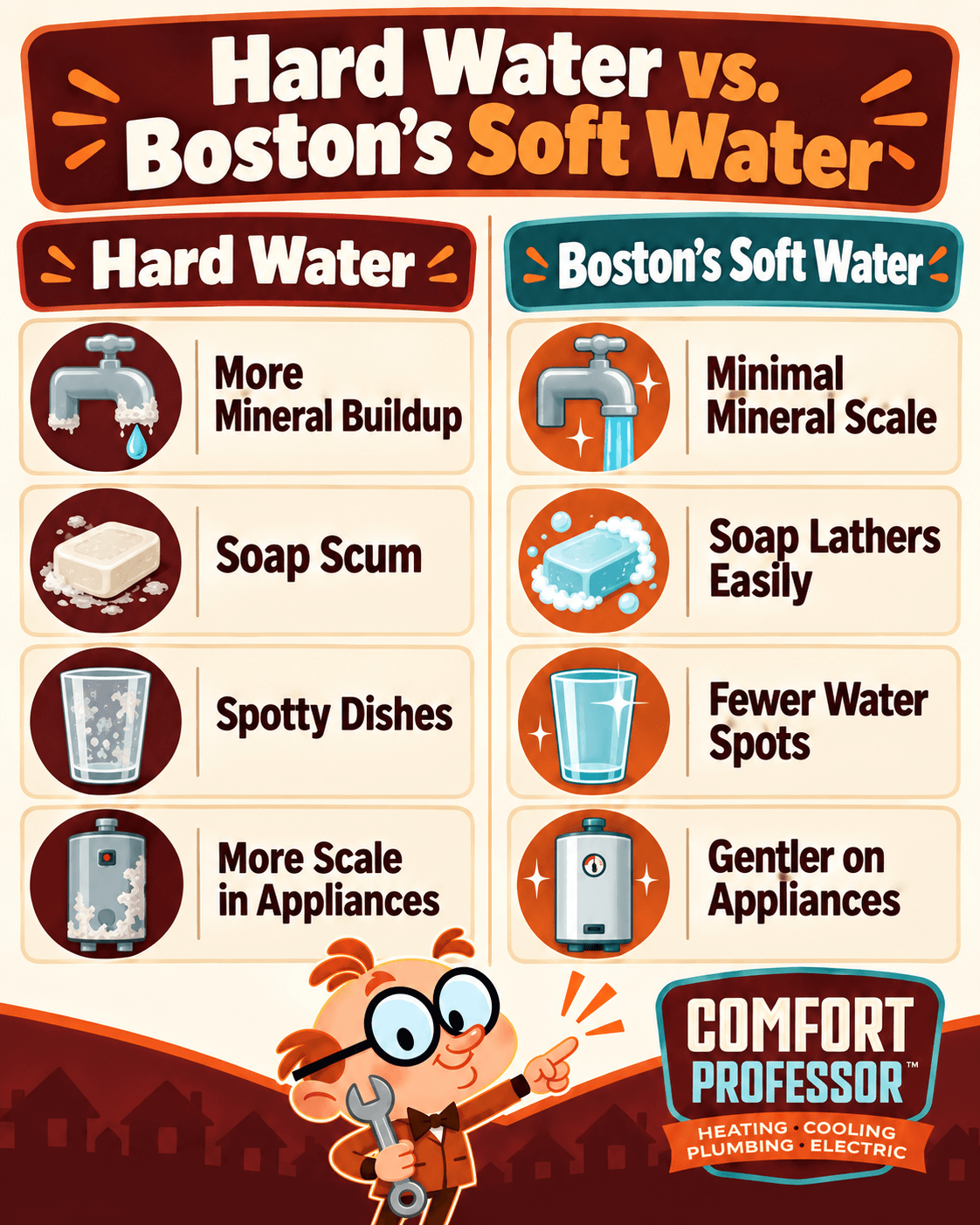
Water hardness measures dissolved calcium and magnesium. Higher levels can leave mineral scale on faucets, shower glass, water heaters, and appliances. Soft water contains much less of those minerals.
According to the MWRA’s drinking-water FAQ, its water has approximately 16 milligrams per liter of hardness. The agency specifically says MWRA customers generally do not need a water softener.
Soft water also needs less soap and detergent. If dishes feel filmy or laundry seems difficult to rinse, using too much detergent may be part of the problem.
White marks do not always prove that the home has hard water. They may come from:
Before installing a softener, confirm the hardness with a water test. This avoids treating the wrong problem and adding equipment the home may not need.

This distinction matters. A standard ion-exchange water softener reduces hardness minerals such as calcium and magnesium. It is not designed to solve every water-quality concern.
A softener does not automatically remove:
The right treatment depends on what is actually present. A sediment filter, activated carbon filter, reverse-osmosis system, lead-certified point-of-use filter, or another treatment method may be more appropriate than a softener.

MWRA’s water is lead-free when it leaves the reservoirs and treatment system. Lead can still enter tap water through a lead service line, old solder, or some older brass fixtures. That makes the plumbing between the water main and the faucet an important part of the answer.
The 2025 MWRA water-quality results explain that corrosion-control treatment has reduced lead leaching, but individual buildings can still have risks related to their plumbing.
If you are concerned about lead, do not rely on taste, smell, or appearance. Lead cannot be reliably detected that way. Use a properly collected sample and a Massachusetts-certified laboratory. Boston property owners can also check the Boston Water and Sewer Commission water-service map and lead-replacement information.
MWRA uses ozone and ultraviolet light for primary disinfection, then adds monochloramine to protect water as it travels through the distribution system. Some people notice more of a chlorine-like smell when water is warmer in summer.
Chilling a pitcher of water may reduce the odor. If the smell is strong, sudden, limited to one faucet, or accompanied by discoloration, test the water or contact the local water department before buying a filter.
Consider professional water testing when:
For health-related concerns, use a laboratory certified for the specific contaminant. The Massachusetts certified laboratory directory lets residents search by the substance they want tested.
If testing confirms hard water, a water softener may protect fixtures and appliances while improving cleaning performance. If the concern is taste, odor, sediment, lead, or another contaminant, a different water filtration or treatment system may be the better fit.
For filters intended to reduce PFAS, the EPA recommends certified products under NSF/ANSI 53 or NSF/ANSI 58 for that specific reduction claim. Certification should match the contaminant. A filter marketed only for better taste is not automatically certified to reduce lead or PFAS.
Comfort Professor can test the water, explain the results, and recommend treatment based on the home’s actual supply and plumbing. Contact the team if you want a clear answer before installing equipment.
No. Homes fully supplied by MWRA generally receive soft water at about 1 grain per gallon. Test first if you suspect a hardness problem.
The water leaving MWRA’s reservoirs is lead-free, but lead can enter through an older service line, solder, or fixtures. Testing is the only reliable way to know the level at a specific tap.
A standard water softener is not a substitute for a filter certified to reduce lead. Treatment should be selected using test results and a verified contaminant-reduction claim.
Some people notice the disinfectant more during warm weather. Chilling the water may reduce the odor. A sudden or unusually strong change should be reported or tested.
Testing can be worthwhile in an older building, when the service-line material is unknown, or when the water’s taste, odor, or appearance changes. It can also prevent you from buying the wrong treatment system.
Backed by our No-Breakdown Maintenance Guarantee. If we should have caught it and didn't, your maintenance is on us.
Free Second Opinions. Already got a quote from another company? We'll come out and take a look for free.
Considering a replacement instead? Ask about $1,000 in heat pump savings + up to $8,500 in rebates.
Call for details. Restrictions apply. Offer tier applied is based on the date you schedule service.